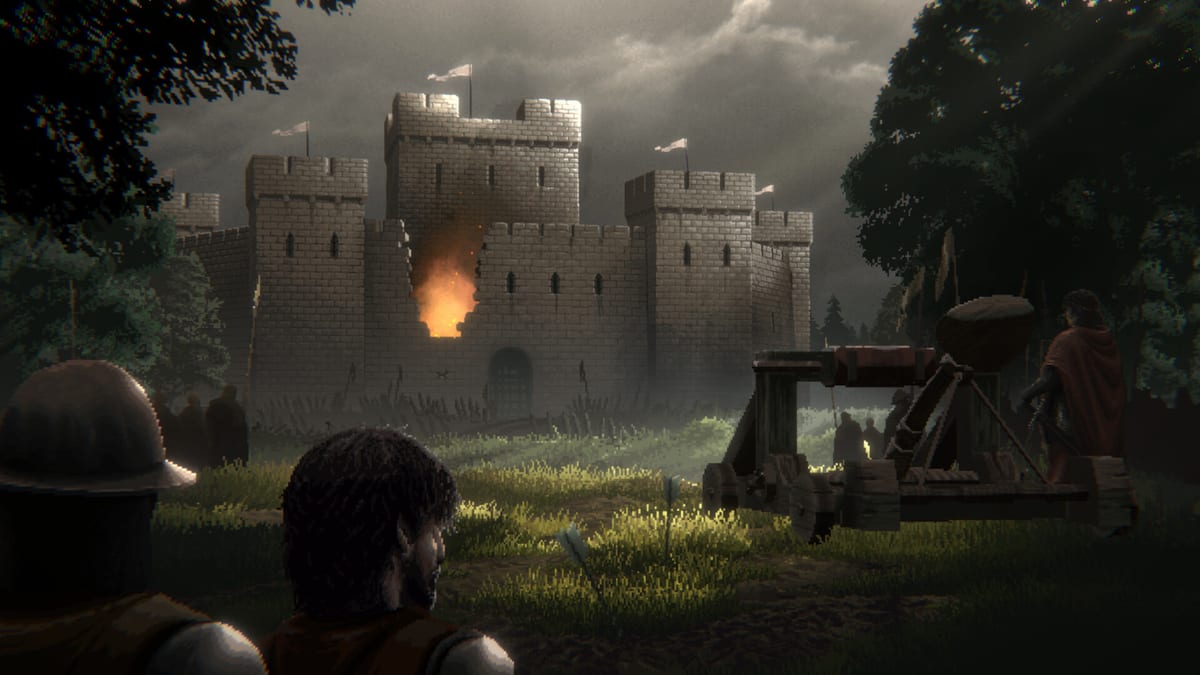
Defender of the Crown The Legend Returns Kingdom Mode: dice instead of stacks
A separate game in the same England, built for runs instead of one long 1149.
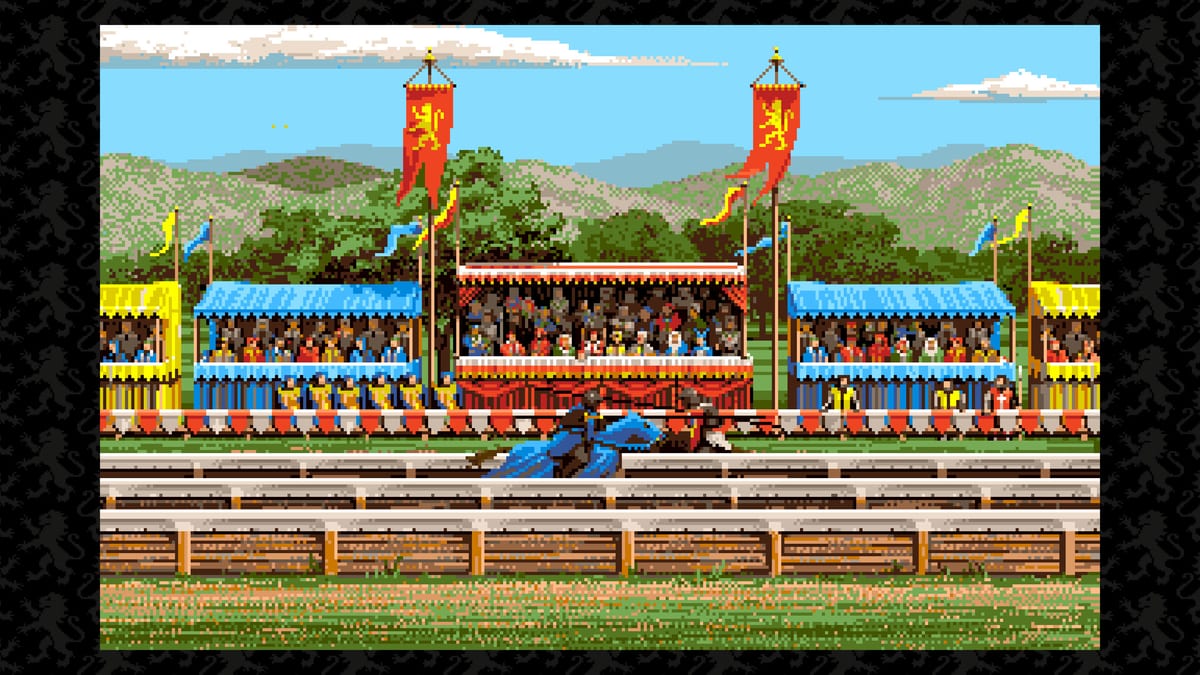
Kingdom Mode is not Classic with a luck slider. Steam’s FAQ calls it a roguelite deck-builder with dice-based tactical combat. Naumenko called it a different game in the original’s world. Reviews called it the reason to recommend the package to anyone who did not grow up with an Amiga. Believe the strongest of those sentences.
The loop in one paragraph
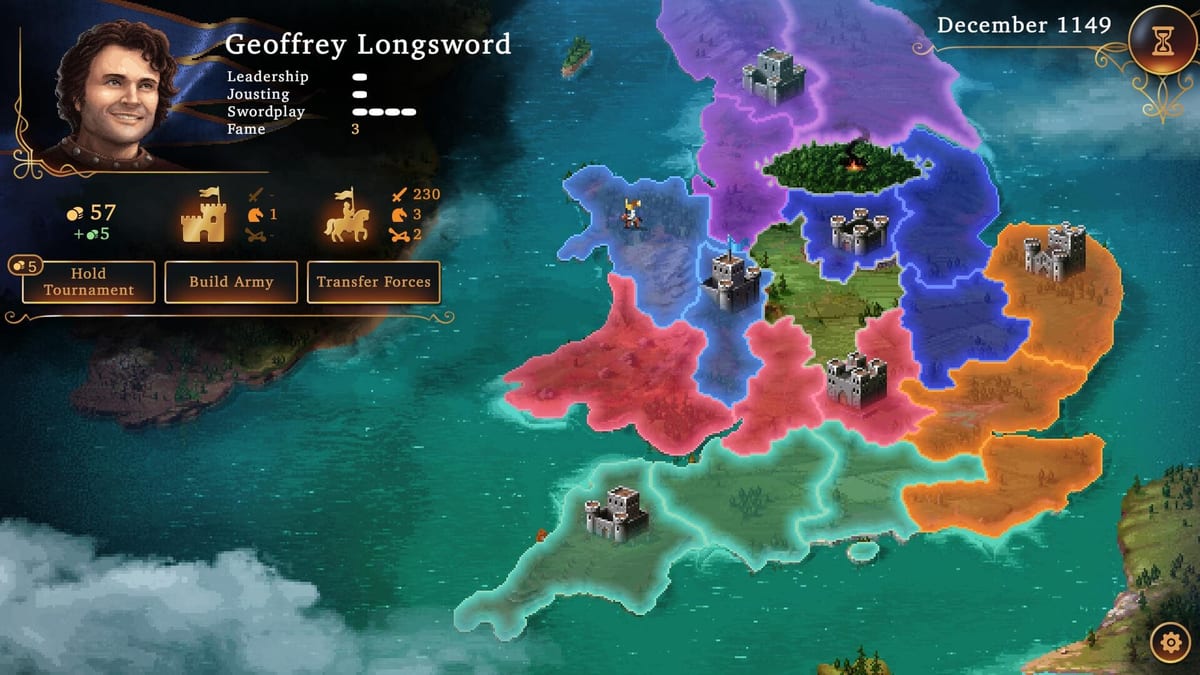
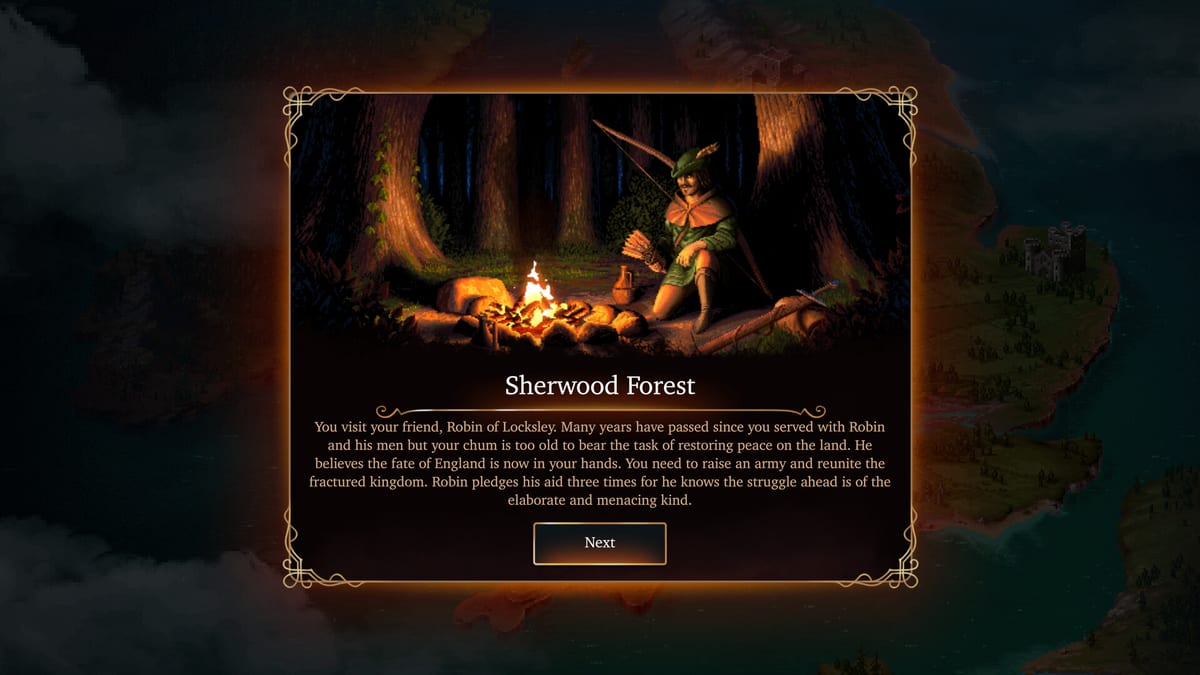
You walk a familiar England whose events shuffle. Fog hides the next tile. Battles are dice plus tactic cards spent from a leadership-and-fame budget. Sieges are two guesses at the enemy tray. Jousts are timed totals that die on a 1. Hearts are your continue. Empty them and the run ends, then pays you with unlocks — Precious Dice, relics, starting edges — so the next attempt is not identical. Months still pass. Tiles still vanish. Efficiency is a combat stat.
Why it exists
The original campaign is short, cinematic, and historically opaque. Kingdom keeps the verbs — raid, tournament, siege, rescue — and shows the arithmetic. Worthplaying liked that you can see why you won. CGMagazine liked the idea and still found a boss that could brick a seed. Both can be true. A readable system can still roll a mean map. Play the Kingdom Mode guide as the actual manual; this page is only the store-shelf explanation.
Who should start here
Start here if Retro’s quiet duels already annoyed you in a Let’s Play. Start here if you want a session that ends the same night. Start here if you like deckbuilders and you can tolerate a medieval coat of paint. Do not start here if your entire purchase was “I want to finish the 1986 story with modern lighting.” That person wants Classic Mode.
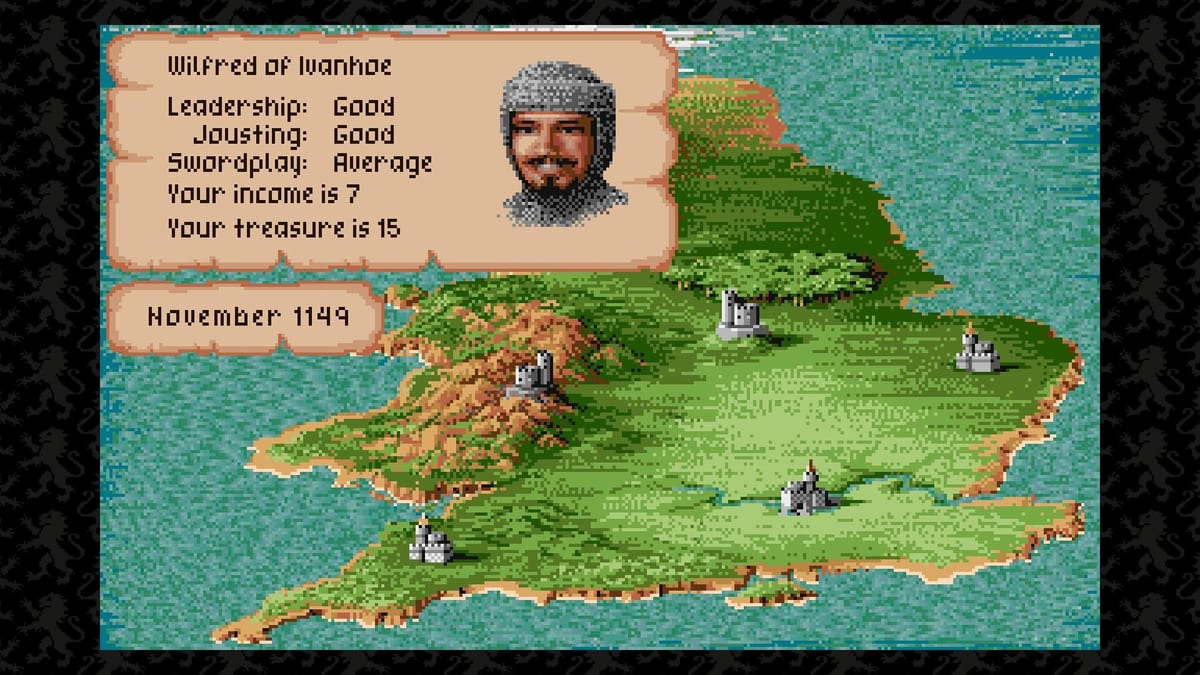
Lord select still matters for the fantasy, but Kingdom’s loadout is also dice and ladies’ traits. Wilfred remains a kind face to put on the run. Wolfric remains a festival specialist. The mode advisor will not argue with a veteran who already knows they came for hearts instead of a saved November.
Launch wrinkles you should expect
No second player across the table. No fast-forward when a clash is already decided. Dice-pool editing can kick you to the map. Steam Deck runs it; battery is the tax. None of that changes the recommendation: if you own the package and you do not already love Amiga timing, Kingdom is the mode that respects your evening.
When a run dies at the first named lord, do not immediately open Retro as revenge. Open the guide, take the unlock, and walk a tighter calendar. England is small. The calendar is not on your side. That is the joke, and it is the design.
If Classic is a novel, Kingdom is a short story collection with the same characters. You will see tournaments, ladies, and keeps, then you will see them again with different dice. That repetition is the product. A first lord who bricks a seed is teaching the calendar, not mocking you. Take the unlock. Tighten the route. Open the Kingdom Mode guide when this shelf-talk is not enough. Leave Retro for a later night when you want the museum to be quiet again.
Frequently Asked Questions
Quick answers drawn from official notes and launch play.
Is Kingdom a remake of the original campaign?
No. It is a roguelite with randomised events on a familiar map. Retro and Classic carry the structured 1986 adventure.
Do unlocks persist?
Yes. Defeats can unlock dice, relics, and bonuses for later runs. That is the point of the heart system.
Can I play Kingdom with a friend?
Not in the launch package. It is a single-player mode, even though the clashes look like table games.
Where is the full strategy?
In the Kingdom Mode guide, including Precious Dice, fog, and the vanishing calendar.