Defender of the Crown The Legend Returns Classic Mode: the same war, a modern HUD
Saves, skippable turns, and a battle panel that at least shows the piles.
Classic Mode is the 1986 campaign told with 2026 manners. Same England, same Saxon-Norman mess, same three army piles, new paint. Naumenko described the quality-of-life list as a HUD, an action wheel, map information on hover, and controller support — because even nostalgic players do not want to wait a second per menu line anymore. Classic is that list turned into a mode.
What changed on purpose
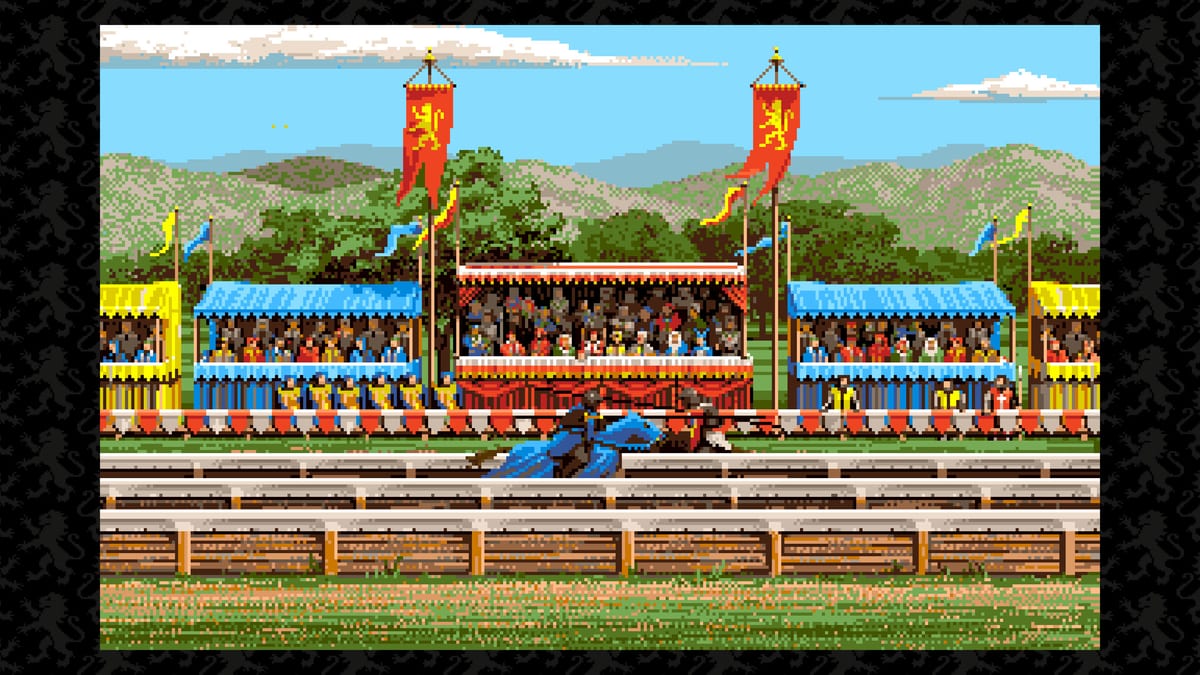
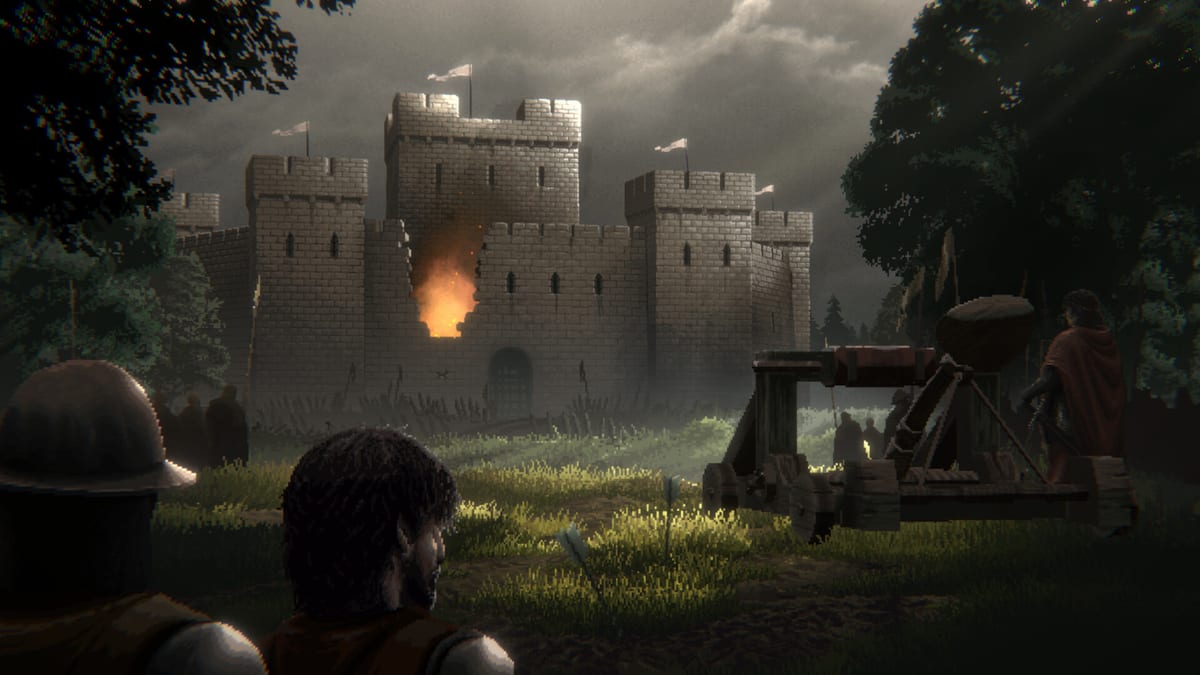
Autosaves and manual saves exist. You can skip a turn instead of being forced into an attack or a tournament. Sieges include poison and flaming ordnance that were planned for the original and never shipped that way. Duels show blocks, thrusts, and energy meters. Joust instructions are clearer even if a loss can still feel abrupt. Building an army ends the turn, which is a pacing change: you no longer recruit and then immediately keep playing as if the month were rubber.
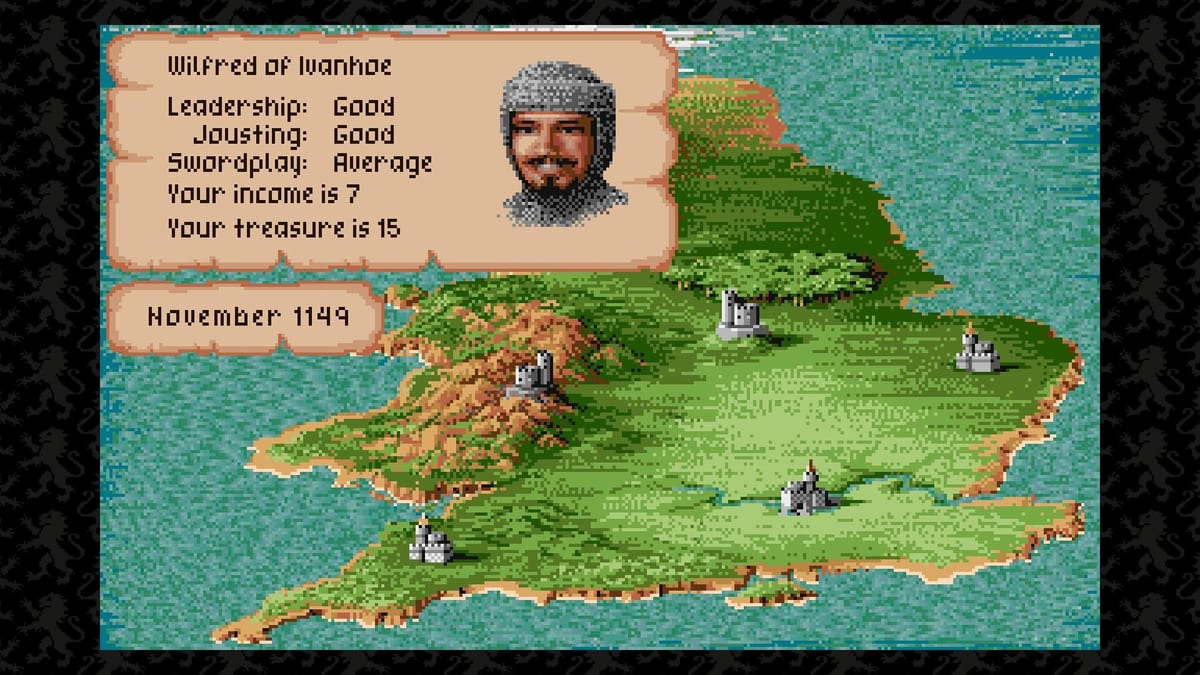
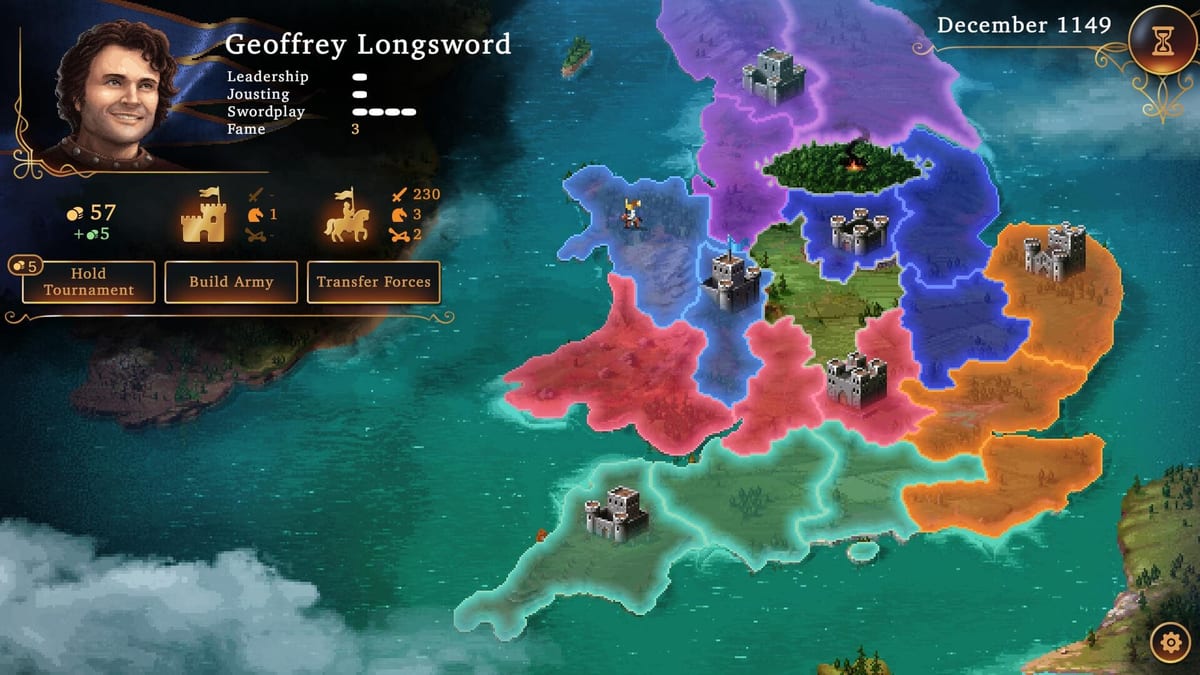
The map HUD is the real tutorial. Gold, predicted income, castle count, soldiers, knights, catapults, and a date in 1149 sit on screen at once. Geoffrey Longsword’s launch-build panel — 57 gold, +5 income, 230 soldiers — is what a working economy looks like. If your panel is empty, you do not have a strategy problem. You have a How to Play problem.
What did not change enough
Reviews wanted enemy army sizes on the overworld and a less opaque resolution once orders are issued. Classic shows numbers on the battle panel — Brian de Bois-Guilbert can still outnumber you three to one — and then still plays like a stack war. Screen shake cannot always be disabled. Stagger in a duel can linger in a way the UI does not explain. Classic is better than Retro. It is not a different genre. If you need the genre change, Kingdom Mode is waiting.
Politics still have a fuse
Saxon peace is a Classic-mode fact Nordcurrent printed in public. Allies let you travel. The first Norman castle ends the courtesy. The campaign walkthrough is written for this fuse. Classic’s extra munitions will not save a lord who lights it for a screenshot.
Who Classic is for
Classic is for players who want a beginning, a middle, and a united England, with nights that have health bars. It is for people who will read How to Joust once and then win a festival. It is not for people who want a run to end in forty minutes with a new relic. Those people already know they want Kingdom.
Start as Wilfred. Spend the peace months recruiting catapults. Learn one corridor in How to Duel and Raid. Then take a Norman keep on purpose. If the campaign still feels like Catan before it clicks, stay another hour. If it feels like a museum with extra buttons, you have permission to open the other tile on the title screen.
The mode advisor will tell you the same thing in fewer adjectives. Classic is the middle path. Middle paths are allowed to be the right ones.
One more Classic-only habit: look at the hourglass before you open a tournament you cannot afford. Skip-turn exists so you can pass a bad month. Saves exist so a failed raid is not a lost evening. Use both. Then, when the first Norman keep is down and former friends are hostile, do not blame the HUD. The HUD warned you with a date. The campaign walkthrough warned you with a fuse. Classic is manners around an old war, not a different war.
Frequently Asked Questions
Quick answers drawn from official notes and launch play.
Does Classic keep the original campaign?
Yes. Same 1149 structure and story beats, with a new look, HUD, saves, and clearer minigames.
Can I skip a turn in Classic?
Yes. That skip, plus saves, is a major difference from being forced into an action every month.
Did sieges change?
Classic adds munitions such as poison and fire. You still need catapults and a plan; see How to Siege.
Is Classic easier than Retro?
It is clearer, not automatically easy. Army math still punishes pride. Kingdom is the actually different sport.